Fillings and Sealants
Tooth decay and cavities are common dental issues. Tooth-colored fillings restore your tooth and help prevent the problem from developing into something worse.
Fillings and Sealants in Ogden, Utah
What is a tooth filling?
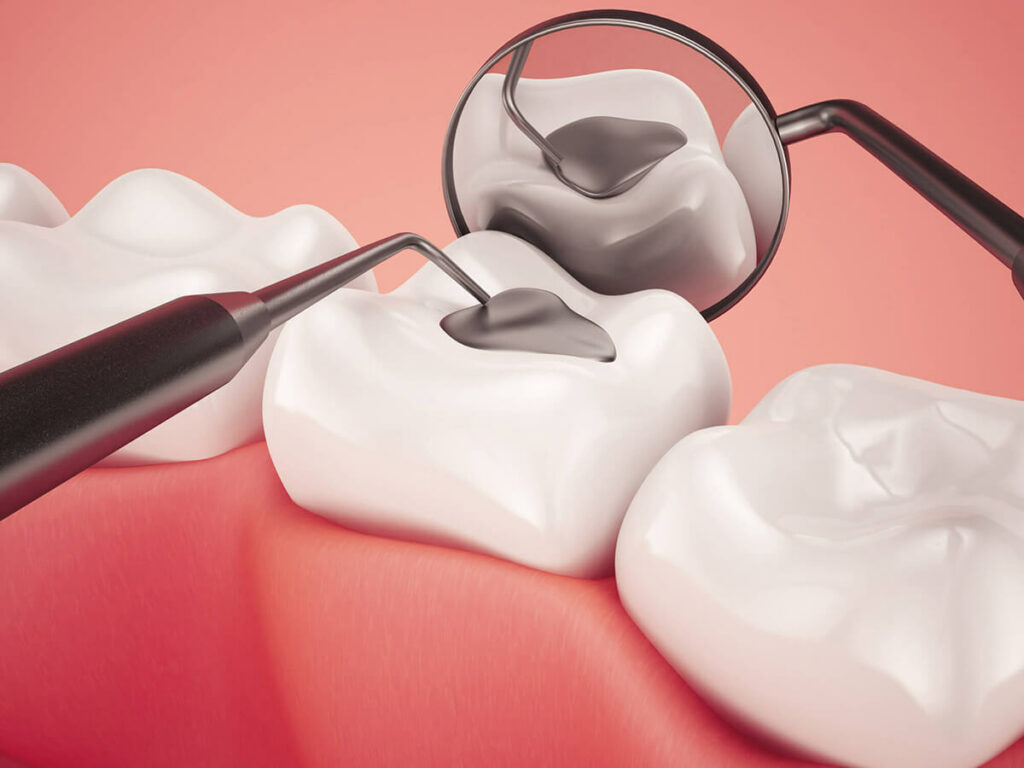
A filling is a restorative procedure used to address cavities or minor decay and damage. Fillings are widely performed and have a high success rate. At Haslam Dental, we provide a choice between composite fillings and amalgam fillings. The selection between these types is based on your needs. However, composite fillings are often favored because they match the natural color of teeth, making them more suitable for visible teeth that others notice.
What are dental sealants?
Sealants are thin layers applied to teeth that serve as a shield against cavities. While commonly used for children, they are also applicable to adults. Sealants offer a quick, cost-effective way to prevent cavities and the need for tooth fillings.
-
How do cavity fillings work?
Cavity fillings are required because of the deterioration of holes left in the tooth due to tooth decay. Left unchecked, the decay will continue to spread and damage the tooth. During the filling procedure, dentists clean away the decay inside the cavity, usually with a drill, to prevent further damage. But this doesn’t fix the damage that has already been created, so a filling is necessary. The intent of the filling is to replace the part of the tooth that is missing or destroyed by tooth decay. The dentist molds the filling to match the shape of the surrounding tooth, which restores the strength and integrity of the tooth and prevents further decay from happening.
-
How long does a dental sealant last?
Dental sealants have been used and proven to be effective since the 1970s. They are mainly placed on chewing surfaces and are effective in preventing tooth decay. Their lifespan can vary, but many last for years, and it is possible to place a new sealant on a tooth if the sealant wears off. It is important to note that sealants only protect the surface of the tooth on which they are placed. Using fluoride and other preventative cleaning practices will still help protect all the surfaces of the tooth from decay and cavities.
-
What types of filling materials are available?
There are several types of materials used for fillings, including gold, porcelain, silver amalgam (a mixture of mercury with silver, tin, zinc, and copper), tooth-colored plastic, and composite resin. There is also a material containing glass particles known as glass ionomer. This material is used in ways similar to composite resin fillings. The type used depends on your dentist, the extent and location of your tooth decay, and, sometimes, your insurance coverage.
-
Who qualifies for dental sealants?
Sealants are designed for healthy teeth that have not yet developed cavities. In most cases, they’re placed on permanent molars shortly after they come in (around the ages of 6 and 12, respectively). However, adults can also choose to get sealants. It may be that their childhood sealants came off, or they’re starting to develop cavities in other teeth for the first time.
Investing in affordable dental sealants can help you prevent more extensive (and expensive) oral health treatments in the future.
-
Should I have tooth sensitivity after a filling?
Yes, mild tooth sensitivity after a filling is common and usually temporary. You may notice sensitivity to hot or cold foods, pressure when biting, or sweet foods for a few days to a few weeks after treatment as the tooth adjusts and the surrounding nerve tissue heals. The sensitivity should gradually improve over time. However, if the discomfort is severe, worsens, lasts longer than a few weeks, or makes it difficult to bite down comfortably, contact your dentist so the filling can be evaluated and adjusted if necessary.
More questions about fillings or sealants?
Curious about cavity fillings or dental sealants? The team at Haslam Dental is here to help—contact us today!